
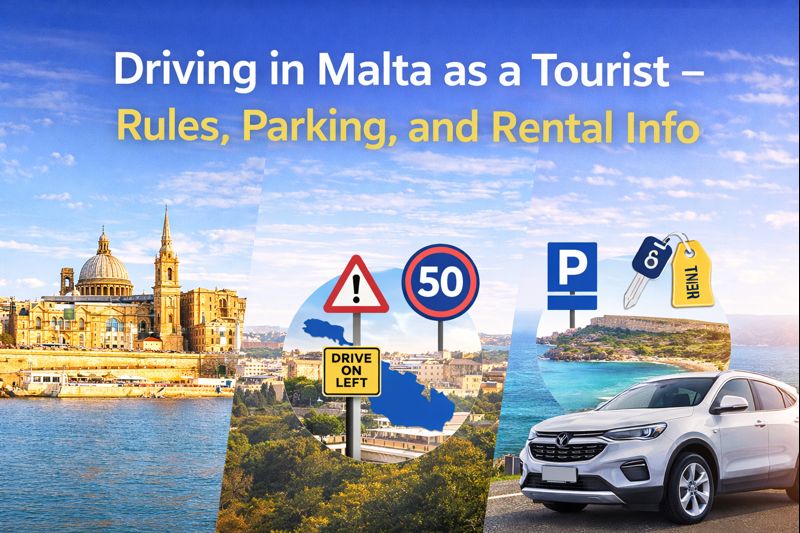
Driving in Malta as a Tourist – Rules, Parking, and Rental Info
Driving in Malta can be one of the best ways to explore the islands—especially if you want the freedom to visit hidden beaches, small villages, UNESCO sites, and viewpoints that buses don’t always reach. But Malta’s narrow roads, busy town centers, and strict driving rules often surprise first-time visitors. This guide covers everything tourists need to know about driving in Malta, including road rules, parking tips, car rental advice, and essential safety information.
Is Driving in Malta Easy for Tourists?
Driving in Malta can be enjoyable—but it’s different from many other countries. Roads are often narrow, traffic can be heavy during peak hours, and Maltese drivers can be assertive. However, with some preparation, most visitors find it manageable.
Quick facts for tourists driving in Malta:
Traffic drives on the left-hand side.
Roundabouts work like the UK—give way to traffic from the right.
Signs are in English, making navigation easy.
Malta is small—no drive is longer than 45 minutes on the main island.
Driving Rules in Malta (Must-Know for Tourists)
1. Drive on the Left
Malta follows the same system as the UK, Australia, and Cyprus. If you're from a right-hand–driving country, take extra care when:
- Turning at junctions
- Entering roundabouts
- Reversing out of parking spaces
2. Speed Limits in Malta
Malta has strict speed enforcement, and speed cameras are common.
Typical limits:
- 50 km/h in urban areas
- 60–70 km/h in open roads
- 80 km/h on major arterial roads
Fines can be issued to rental companies and passed on to you.
3. Seatbelts & Child Safety
- Seatbelts are mandatory for all passengers.
- Children under 135 cm must use appropriate car seats.
- Many car rental companies offer child seats for an additional fee.
4. No Drinking and Driving
Malta’s legal blood alcohol limit is strict:
- 0.08% (even lower for professional drivers).
- It’s best not to drink if you plan to drive.
5. Using Phones While Driving
- Handheld phones are illegal.
- Use hands-free systems only.
Parking in Malta – What Tourists Need to Know
Finding parking can be challenging in busy areas like Sliema, Valletta, and St. Julian's. Follow these tips to avoid fines.
1. White, Blue, and Yellow Lines
- White lines → Free parking
- Blue lines → Resident parking—tourists must avoid during restricted hours
- Yellow lines → Strictly no parking
2. Controlled Parking Zones (CPZ)
Town centers may have:
- Time-limited parking
- Ticket machines
- Resident permits only
- Check signs carefully before leaving your car.
3. Parking in Valletta
Driving into Valletta is not recommended.
Instead:
- Park at the Floriana Park & Ride
- Take a shuttle or walk 10 minutes into the capital
4. Private Parking Garages
You’ll find car parks in:
- Sliema
- St. Julian’s
- Valletta
- Qawra/Bugibba
These are the easiest option if you're unfamiliar with the area.
Should You Rent a Car in Malta? (Tourist Guide)
Renting a car in Malta is ideal for:
- Travelers visiting beaches like Ghajn Tuffieha, Paradise Bay, or Mġarr ix-Xini
- Families wanting flexibility
- Those staying outside major towns
It’s less useful if you’re staying in the city center and don’t plan to explore much.
Car Rental Requirements
To rent a car in Malta, you need:
- Valid driving licence (EU/UK licences accepted)
- Passport for identification
- Minimum age: 21–25 depending on rental company
- Credit card for deposits
Automatic or Manual?
- Malta has many hills and narrow streets.
- Most tourists prefer automatic cars, but rentals often charge more.
- Fuel Options
Most rental companies offer:
Full-to-full (recommended)
- Prepaid fuel (avoid—more expensive)
- Fuel stations are widely available and accept cards.
Driving in Gozo
Gozo is quieter and easier to navigate than Malta, making it great for tourists who want a relaxed driving experience. You can bring your rental car on the ferry at Cirkewwa.
Top driving spots:
- Dwejra Bay
- Ta’ Pinu Basilica
- Ramla Bay
- Victoria (Rabat)
Essential Driving Tips for Tourists in Malta
- Use Google Maps or Waze—traffic changes quickly.
- Expect narrow village streets—drive slowly and fold mirrors if needed.
- Watch out for scooters and delivery bikes weaving through traffic.
- Avoid peak traffic times: 07:30–09:30 and 16:30–18:30.
- If unsure, pull over and let locals pass.
- Consider renting a small car—much easier to park.
Is Driving in Malta Worth It for Tourists?
Yes—if you want flexibility and plan to explore beyond the most popular towns.
But it’s not ideal if you:
- Are uncomfortable with narrow roads
- Don’t like busy traffic
- Plan to spend most time in Valletta, Sliema, or St. Julian’s
For many travelers, using buses or Bolt/Uber is enough—but for adventurers, renting a car in Malta is the best way to see the islands.
Final Thoughts
Driving in Malta as a Tourist – Rules, Parking, and Rental Info can feel overwhelming at first, but with the right support, discovering Malta becomes smooth, simple, and stress-free. Whether you want to explore hidden beaches, visit charming villages, or enjoy the islands at your own pace, having the right vehicle makes all the difference.
That’s why Rent & Rides is here to make your trip effortless.
We offer easy, reliable, and affordable car rentals in Malta, perfect for tourists who want flexibility without the hassle. With well-maintained vehicles, transparent pricing, and friendly local support, we help you enjoy the freedom of driving in Malta with complete confidence.
Conclusion
Driving in Malta is much easier and more enjoyable with the right rental partner. Rent N Rides offers reliable cars, clear pricing, and local support, making it the best choice for tourists who want a stress-free and flexible way to explore Malta at their own pace.